


A Response to PCA’s CN Study Committee
The Presbyterian Church in America’s Christian Nationalism committee has released a partial report. It is a momentous piece of writing. It is to my knowledge the only report like it…


The Presbyterian Church in America’s Christian Nationalism committee has released a partial report. It is a momentous piece of writing. It is to my knowledge the only report like it…

Rev. Dr. James Anderson, Carl W. McMurray Professor of Theology and Philosophy at Reformed Theological Seminary Charlotte, posted a helpful engagement at the intersection of Christianity and natural rights on…
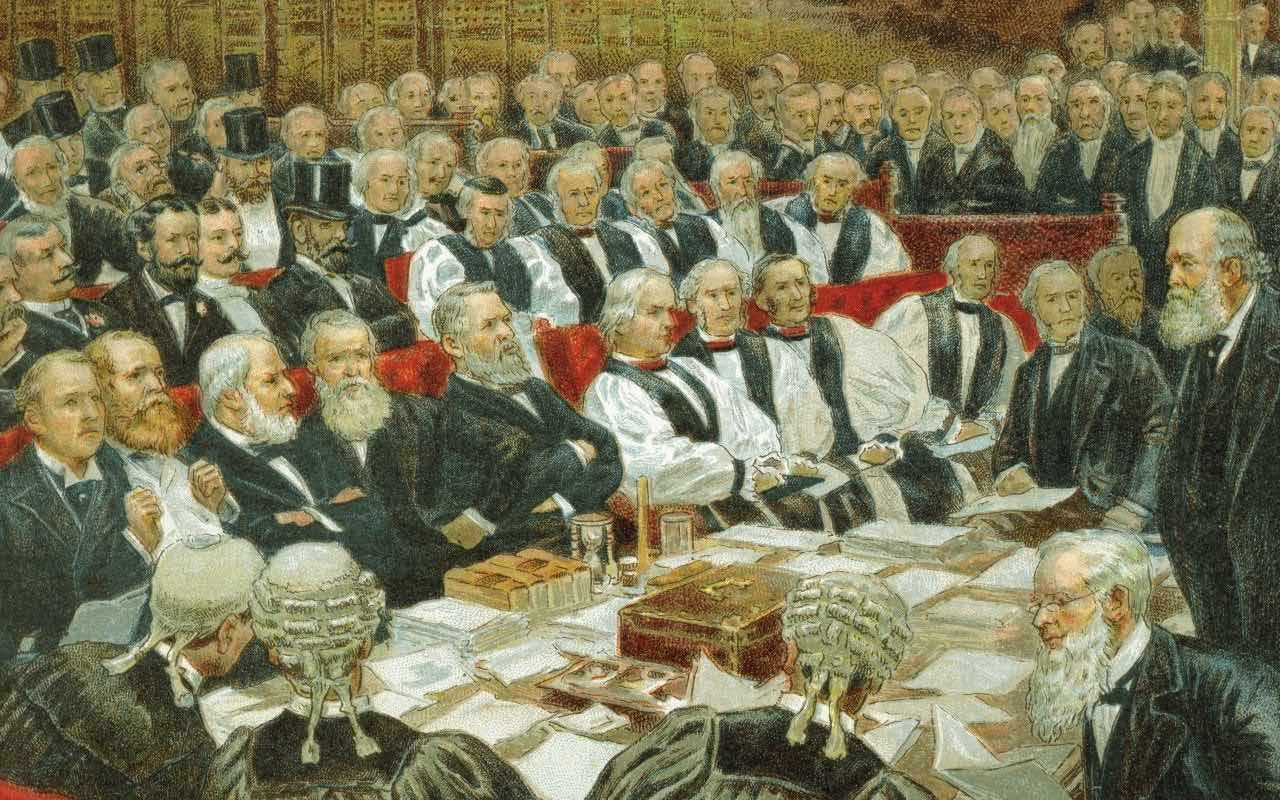
The Middle Ages are back in style. Pope Leo XIV and the Trump administration are dueling over political theology. Jest as we might, the war of words in the media…
At The Telegraph this week, Tim Stanley, an Evangelical Baptist turned atheist turned Anglican turned Roman Catholic, posits that President Donald Trump’s Iran War is being pursued at the behest…
Italian nationalist Giuseppe Mazzini was in many ways the father of modern nationalism. It may surprise 21st-century readers accustomed to thinking of nationalism as a right-wing phenomenon to discover that…
What did the Presbyterians who met in 1788 intend regarding political theology? If the amended Confession did fundamentally change the church’s ostensible relationship to the state, did even a conception…
In 2008, James Wellman, a historian at the University of Washington’s Henry M. Jackson School of International Studies, published Evangelical vs. Liberal: The Clash of Christian Cultures in the Pacific…
The late Rev. Dr. Richard Turnbull wrote in 2022 that it was a mistake to think that political theology was an afterthought in John Calvin’s Institutes of the Christian Religion.…
In the reactionary aftermath of the great liberal revolutions that rocked Europe in 1848–49, liberal heroes, or heroes who were at least perceived to be liberal by the Anglo-American press,…
Christianity informs the peace of earth organized and implemented by the American military abroad and domestically, and American soldiers implement that same peace
University of Florida professor Samuel Goldman has an important piece at Compact Magazine this week. Christian Zionism, Goldman rightly notes, is not a creation of Dispensationalism or the 20th century.…
An essential aspect of debates over political theology and Christian politics in the 21st century revolves around the question of whether the government can enforce the first table of the…
James Baird, a teaching elder in the Presbyterian Church in America, is releasing his King of Kings: A Reformed Guide to Christian Government this week. It is a worthwhile work;…
Between 1785 and 1788 two major Protestant groups—parishioners in the Church of England and Presbyterians—confronted the political changes that occurred because of the founding of the American republic in the…
When Timothy Keller published The Reason for God in 2008, the work was widely understood to be an apologetic for Christianity to secular liberal society. The work’s title alludes to…
In the 160 years between the US Civil War and 2025, history and literature of the American South have offered an ahistorical blending of the politics and religion of the…
Rev. Dr. Kevin DeYoung and Rev. James Baird, two teaching elders in the Presbyterian Church in America, have recently carried on a civil but substantive debate on the nature of…
By the late Victorian Era, Church of England and to a lesser extent Protestant Episcopal Church clerics and intellectuals began to write works aiming to present a sort of post-mortem…
The aftermath of the Civil War saw a significant rethinking of racial theory among southern Presbyterians. Benjamin Morgan Palmer Jr. and Robert Lewis Dabney in particular took up “a defense…
Mid-19th Century Britain and to a lesser extent the United States of the same era became the arenas of the great debates over the relationship between Christianity, free trade, nationalism,…
A year after the defeat of the Confederacy, Evangelical Presbyterian-turned-Congregationalist minister Charles B. Boynton, professor at the Naval Academy, Chaplain to the House of Representatives, and president of what became…
This week US President Donald Trump wielded the startling powers of the United States presidency when he dismissed senior generals and replaced them with handpicked successors. While there was nothing…
The question of the Bible and Biblical authority defined debates among nineteenth century American Protestants as they appealed to the Christian scriptures to justify positions in political debates. Most Protestants…
My college recently started its Center for Military History and Strategy. We’ve been able to bring in some of the best historians whose work intersects military history, the Classics, philosophy,…
In the third volume of Charles Hodge’s 1871 Systematic Theology, the Princeton Seminary professor offered a formula for how Protestants should understand moral responsibility in the context of what is…
No French Reformed Protestant influenced and informed French politics in the 19th Century more than François Guizot. Best known as King Louis-Philippe’s last prime minister, Guizot served in some political…
In the 19th century Anglo-American historians—almost inevitably devotees of what Herbert Butterfield called the Whig or Protestant theory of history—inevitably viewed Anglo-American political developments in the 17th and 18th century…
In the aftermath of Napoleon’s deposition in 1814 a significant political and religious renaissance among French and Swiss Protestants gained disciples across Western Europe, in the German states, and even…

Donald Trump won reelection this week. A major facet of his electoral coalition was a shift towards the Republican presidential ticket among young men between the ages of 18 and…

Herman Melville published his autobiographical novel Redburn in 1849. The work proved to be one of his best, and in many ways remains his most quintessentially American novel. Redburn lacks…
In 1857 James Waddel Alexander, prominent Presbyterian minister and former professor at what is now Rutgers University, and later at Princeton Seminary, spearheaded the publication of a short work called…
Conversations among conservative Christians in the United States pertaining to questions of political theology tend to revolve around cultural or social politics and the retention of a Christian socio-moral order.…
Historically-rooted works on Anglican political theology, particularly political theology of American Anglicans, remain in relatively short supply. Michael Bird and N.T. Wright have published their Jesus Among the Powers but…
In a series of lectures begun at the end of the American Civil War, Hodge offered evidences for what he believed were incontrovertible proofs of Christianity’s social and cultural benefits…
In the Spring of 1776, Anglican priest and academic Richard Watson—then Regius Professor of Divinity at Cambridge and later the Anglican bishop of Llandaff from 1781 to 1816—wrote a short…
In November 1860 Robert Lewis Dabney addressed the young men of Hampden-Sydney College. The Governor of Virginia called a fast day for 1 November, a not infrequent occurrence in the…
A new paperback edition of Brad Birzer’s American Cicero: The Life of Charles Carroll has recently been published by Regnery Gateway. It’s the best standard length biography of Charles Carroll…
Timothy Mason Roberts’ Distant Revolutions: 1848 and the Challenge to American Exceptionalism provides one of the best scholarly treatments of American intellectual, political, and religious interactions with the rash of…
Millennial impulses among American Congregationalists and Presbyterians defined Calvinist religiosity throughout the Nineteenth Century. Early Republic divines in North America tended to embrace a postmillennial eschatology. John Watson Adams, a…
The American Civil War ignited the pens of Protestant clerics, particularly when it came to writing political sermons. Sermons and discourses on war and politics proliferated in both the North…

Who is the final arbiter for Christian conduct in politics?
In the summer of 1848, Francis Wayland, president of Brown University and perhaps the preeminent Baptist intellectual in the United States, preached a sermon at Brown’s chapel that focused on…
When the Mexican War began in 1846, American Protestants split over whether the war was justified or not. Northern Protestants denounced the war as a pro-slavery landgrab by expansionist Democrat…
In the Spring of 1848, Anglicans in the British Empire watched warily as revolution spread across Europe. Paris revolted in February and overthrew liberal King Louis-Philippe. Revolutions in the German…
Between 1848 and 1871, Western Europe and North America underwent a series of political upheavals, many of them violent, that pitted broadly liberal nationalist movements against conservative (and even sometimes…
Despite a wealth of martial imagery in traditional Anglophone hymnody and in English-language religious discourse broadly, modern Americans flinch at the notion of churchmen acting in a martial manner, particularly…
In 1874, the American Church Missionary Society, with the sanction of the presiding bishop of the Protestant Episcopal Church in the United States, consecrated James Theodore Holly as missionary bishop…
In 1982 Grady McWhiney, then one of the deans of southern and Civil War history, and his student Perry Jamieson published Attack and Die: Civil War Military Tactics and the…
In his The Novel: Who Needs it? Joseph Epstein proposes that Harriet Beecher Stowe’s Uncle Tom’s Cabin was “beyond doubt the most important novel published in the United States.” The…
In the nineteenth century the rise of more advanced technology for oceanic exploration, the subsequent increase in maritime traffic, and the first major discovery of fossils of dinosaurs and related…
As the scale of the American Civil War became clear to Americans north and south, Protestant clerics engaged the subject of war more regularly in their preaching. By the Fall…
In the aftermath of the American Revolution the newly Americanized Protestant Episcopal Church in the United States—the successor to the colonial Church of England, revised the Book of Common Prayer…
In the third week of November, 1862, William G.T. Shedd mounted the ornate pulpit of New York City’s Brick Presbyterian Church. Historian Mark Noll calls Shedd a high Calvinist comfortable…
On 4 December, 1829, the Governor-General of Britain’s state-run monopoly and de-facto government of colonial India—the East India Company—issued what became the most controversial mandate of his administration. Lord William…
What happened when Anglicans tried converting Greek and Arab Orthodox Christians in 19th century Palestine?
It was in Germany, Graetz argued, that the Reformation, and a Jewish-influenced Reformation, gave the world Luther and modern Protestantism.
In 1842, the United States’ major Presbyterian publishing house, the Philadelphia-based Presbyterian Board of Publication, offered to the public one of the strangest books they had yet published. The author,…
In the nineteenth century, British Protestants moved to Palestine for the purposes of missionary work among Arabs and Jews. One of most important early Protestant missionaries to Palestinian Arabs however…
In the inaugural volume of The Southern Presbyterian Review published in December, 1847, Benjamin Morgan Palmer the younger reviewed Andrew Bonar and Robert Murray M’Cheyne’s Narrative of a Mission of…
George B. Cheever and "God's Hand in America", 1841
In 1854, George Washington Doane, Episcopal bishop of New Jersey, addressed the students, faculty, and friends of Burlington College, adjacent to the Episcopal parish church in Burlington, New Jersey. He…
Humans, argues Rev. Dr. Jonathan Master, “need clear answers to the biggest questions in life and the most consequential matters of eternity.” This is because “knowing what we believe about…
In 1831 William Mercer Green, an Episcopal clergymen and later bishop of Mississippi, used a lecture at the University of North Carolina to extol what he argued was the near…
It was, declared the bishop, the United States’ “civil and religious institutions that we may, without the imputation of vainglory, boast the preeminence.”
Christopher Edwards Gadsden, rector of St Philip’s Church in Charleston, South Carolina and later bishop of South Carolina, published a comprehensive biography of Theodore Dehon in 1833. Dehon served as…
"Were such a government as this to be swept from its base, either by the violence of foreign hostility, or by the hands of her own misled and infatuated children-I should never cease to deplore it as the deadliest interruption which ever had been given to the interests of human virtue, and arm, to the march of human improvement."
In an 1848 election sermon to the Massachusetts legislature, Alexander H. Vinton, rector of St. Paul’s Episcopal Church in Boston, told the state legislators the state had a divinely ordained…
Early Republic Protestant divines saw the implementation of a public educational system as a necessity for a healthy republican order. Charles Hodge, principle of Princeton Seminary and perhaps the most…
Early Republic and Early National Protestant conceptions of the sacred-secular distinction in some ways were less a binary or a distinction than values in a single divine hierarchy. Few religious…
How did 19th century Episcopalians views the relationship between church and state?
The subjugation of the frontier seems to have been done through institutions that were at best ambivalent about democracy, liberalism, and individualism.
In 1835 Lyman Beecher wrote his Plea for the West, urging Protestants to settle and proselytize the American West lest Roman Catholics convert the whole region. Eight years earlier, Philander…
The United States’ centennial celebrations in 1876 took place in a republic barely a decade removed from a civil war that killed over 700,000 men. The ensuing decade that followed…
Anglicanism represented the best chance of making the American West civilized and Protestant.

Protestant intellectuals, particularly those involved in colleges, universities, and seminaries, denounced phrenology and racialized science as incompatible with Christianity.
Evangelicals are not the only ones who have assumed the need for a religious body politic in America.
Theology, it appeared to Hodge, naturally included political theology
Liberals historically did not accede to Enlightenment or secularist ideology regarding the civil order.

Was the early American republic really marked by deism, the Enlightenment, and secularity?
1800 saw the invention of a secular America, not a Christian one. There was no need to invent an explicitly Christian founding, largely because the Christian socio-civil foundation of the republic was already largely assumed.
Older views of church and state do not fit modern American binaries regarding their missions.
The constitutional settlement was never universally celebrated or even understood.
"We fully recognize now, the unity and brotherhood of all believers in Christ Jesus—a unity and brotherhood which is not affected by distinctions of race, nationality, sex, culture, or civil status."
Disestablishment in the newly-independent United States severed the institutional interdependence between the state and the visible church. Virginia’s disestablishment in the 1780s triggered a set of similar laws passed throughout…
On Thanksgiving Day, 1837, Robert Hamilton Bishop–Presbyterian minister and president of Miami University—addressed the gathered townspeople of Oxford, Ohio in the First Presbyterian Church. He took as his theme natural…
The Black Protestant tradition’s prevalence in 19th century America deserves rediscovery
On the origins of the British national anthem.
In a 2009 article for Journal of Markets and Morality Stephen Grabill posited that although Protestant social thought was “a vibrant field” that was “ever expanding and alert to emerging…
The First Amendment and the push for disestablishment from the 1780s to the Jacksonian Era redefined the history of the religion and more particularly Christianity in Protestant North America. Disestablishment…
Since the promulgation of the United States’ Constitution in 1788, Protestants across denominational lines largely supported disestablishment and the Constitution’s provision for religious liberty in Article I. Last week I…
Intellectuals and ministers debated the meaning of religious liberty throughout the Early Republic. Almost every observer and writer vigorously supported religious liberty, but there was not significant agreement on what…
I recently weighed in (again) on the questions surrounding the debate over so-called Christian nationalism in the United States. The debate seems to overlap significantly with the question of populism…
In 1846 an obscure French schoolteacher, Peter Stewart Ney, died in Rowan County, North Carolina. He served in the various small home schoolrooms scattered among the Presbyterian gentry in Rowan…
19th Century ministers regularly preached to men carrying guns. Politicians and military figures in the Nineteenth Century United States publicly and enthusiastically committed to the so-called separation of church and state also regularly ordered government workers, soldiers, and militiamen to attend religious services.
During the late Eighteenth and early Nineteenth Centuries, North American Baptists joined their Congregationalist, Methodist, and Presbyterian counterparts in creating colleges and seminaries institutions to teach and train laypeople and…
Nineteenth Century Protestant intellectuals embraced a positivistic vision of liberty in the Early Republic. Liberty in the era generally meant the freedom to pursue societal good. This American religious order…
In 1823, Hugh Lenox Hodge became a lecturer at the University of Pennsylvania’s medical school. Hodge hailed from a well-known Philadelphia family. His father, also Hugh, served as a physician…
Timon Cline has offered a very good piece at The American Reformer on the Protestant foundation of the states that formed the American Union in 1788. It’s a worthwhile piece…
Nineteenth Century Evangelical Protestant reformers foreshadowed their late Twentieth Century co-religionists by their heavy influence on social and moral reform particularly in northern cities. In his Evangelical Gotham, Kyle Roberts…
In 1852 the bishop of Exeter charged his chancellor, E.C. Harington, with preaching on the foundations of the Church of England. Harington used the opportunity to proclaim what he believed…

100 years ago, Allen Oscar Hansen, a professor at Columbia University’s prestigious Teachers College, published what he called an exposition of sources and a source book entitled Liberalism and American…
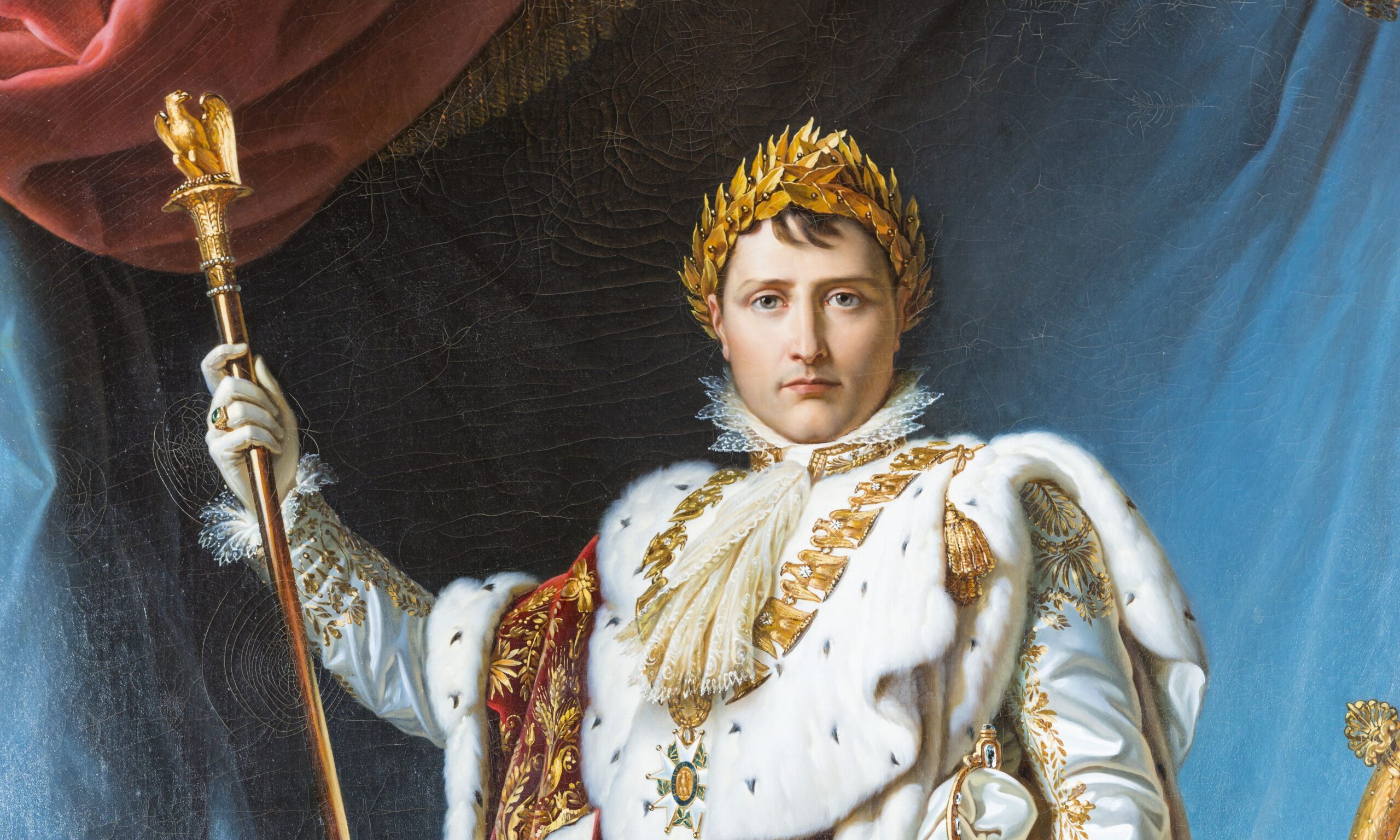
How have evangelicals related to the "Big Men of History"?

What was religion really like on the American frontier?

Washington, Hamilton, Adams, and Jefferson all gravely doubted the future of the nation they created.

The lessons and warnings of Reformed Protestants during the French Revolution.
While the Commonwealth was not the cartoonish inquisition its detractors make it out to be, the Cromwellian regime by no means approached what eventually became the understanding of toleration in the American republic.

What were the differences between over church and state betwen Baptists and the Reformed in the early US republic?
Liberalism has failed. Or so confidently declares Patrick Deneen in his obviously named Why Liberalism Failed. Deneen offers one of the more useful and concise attacks on the often vaporously defined liberalism that has, according to Deneen, plagued modern societies for the last several hundred years. Deneen’s proof of liberalism’s failure is not that it failed to change society, but that liberal societies became exactly what they were supposed to be. The liberal state increasingly worked towards removing cultural and social institutions responsible for governing society’s consumer and sexual appetites. Few orthodox Christians dispute that these are woeful problems. And Deneen deserves praise for identifying the ills that plague modern society. The book’s weaknesses are anachronism, and imprecise and lethargic taxonomy.
