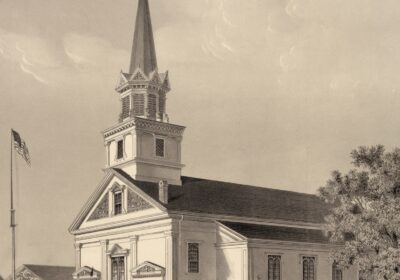
Which way, American man? The question is not rhetorical. At 250, a nation that has made freedom its hallmark must reckon with what freedom actually means, and that question, it turns out, admits of more than one answer, not all of them equally good.
Being American is, by any honest measure, easier to do than to define. In 2026, “What does it mean to be an American?” is a very live question. Whatever else it means to be American, freedom is the animating core of American identity, so central that America has become the benchmark against which other nations in the Western liberal constitutional tradition are measured. “Is Country X more or less free than America is?” we might ask.11. I note that I am saying this as an American. I do not mean to suggest that America is the paragon of freedom. Rather, what I mean is that America, as the sort of historic world player of republican freedom, is often a standard by which other countries are measured against.
The implications of what it means to “be free” would be difficult to examine even if there were a universal agreement on what freedom means. The perennial problem is that not only is there disagreement on what it means to “be free,” but also on what freedom itself is.
As America marks her 250th birthday, that quandary is at the heart of our contemporary political divides. Americans are more factious—that is, divided into competing factions with little shared moral ground—than we have been in recent memory, and the fracture runs deeper than policy. America cannot continue on her current path without a common moral and cultural foundation; how do states like New York, California, and Oregon continue to live in harmony with states like Idaho, Alabama, or Wyoming? How is it possible to have radically different moral and cultural frameworks and still maintain a unified identity as Americans? Or, perhaps a better question, is it possible to maintain a unified cultural identity across moral lines in anything other than a narrow, geographic sense?
In this essay, I will explore three competing views of what it means to be “American.” These views are largely incompatible with one another. My argument is that they are not equally viable: only one view, the Traditional Originalist, provides the moral and cultural foundation necessary to sustain American civil order. The ultimate question of this piece—“Which way, American man?”—is not merely for philosophic speculation. The answer determines whether America can maintain a civil order in which citizens live in harmony while retaining the freedom to respectfully disagree.
The Views Explained
The Traditional Originalist
The colonies that became the United States of America only did so through a long journey of competing European colonial inheritances. The Dutch, the Spanish, and the French all left their mark. The English inheritance, however, is the ultimate foundation for what became the United States. The early Americans (that is, those who made up the population just before and after the War for Independence) were predominantly of English descent; the Declaration of Independence itself is rooted in a principled Lockean, common-law appeal. The cultural framework, from its language to its religion, down to Americans’ preferred drink, was rooted in English forms.
Eighteenth-century English culture does not exist in a vacuum either. By that point in English history, England had been Christian for over a millennium, had experienced religious wars, and had wrestled with the emerging modern world. England, even with subtle Enlightenment undertones, still viewed itself as a distinctly Protestant Christian culture, complete with a Protestant Christian monarch and a Protestant state church. Just as the English colonists saw themselves as the children of Mother England, Protestants in America viewed themselves as the various children of the Church of England: Episcopalians, Methodists, Presbyterians, Congregationalists, and even that wild youngest-born, Baptists, all traced their identities back to Anglo-Saxon Christianity.
In its early setting, America must be understood as belonging to a very particular context, one that was broadly European (W), English (AS), and Protestant (P). While the term “WASP” has often been used as a pejorative, it nonetheless captures something true about early Americans regardless of whether they were in the North or South. America was rooted in (though not exclusively defined by) an English (and more broadly European) Protestant patrimony. Even as America expanded West and received an influx of German and Dutch Protestants, the generally English nature of the country remained.
This English tradition carries a recognizable set of political commitments: the social compact between governed and governor, ordered liberty as distinct from mere license, the rule of law over the rule of men, government by consent of the governed, and the constitutional mechanics—separation of powers, federalism, the right of revolution—that give these commitments institutional form. The classical Christian tradition, mediated through English Protestantism, provided the moral grammar within which these commitments were intelligible: a Creator God who endowed humanity with dignity, a fallen human nature that required institutional constraint, and a covenantal understanding of political community that made self-governance both possible and necessary. These were not abstract propositions arrived at by unaided reason; they were the sediment of centuries of English constitutional struggle, Reformation theology, and common-law practice, intelligible only within the context of a particular tradition.
Given all of this, I term the first view the “Traditional Originalist.” It is rooted in and wishes to conserve the generally English Protestant heritage of America. An adherent of this view does not need to be directly linked by ethnicity or religion to this heritage (one could, for example, be a Brazilian Roman Catholic) to desire to see its general conception of America maintained. We might also call this view the Principled Classical Conservative view, because such a person will be conservative in a way that is consistent with the general contours of the classical Christian tradition.
The Sovereign Self
The second view has something quite different from the first in mind, focusing instead on individual sovereignty. Something in the American character has always prized the self-made man. The vision of the pioneer going out alone, carving a homestead from the wilderness, and prospering by skill and determination carries genuine moral weight. It celebrates real human agency, honest work, and the dignity of a life built rather than inherited. This is not what I intend to criticize. What I have in mind is the philosophical extension of that spirit going beyond its proper limits; the conviction that the self is not merely responsible for its own success, but is the final authority on its own identity and meaning.
The adherents of the view I am describing prize, above all, being “self-defining.” They are distinctly Romantic in that they hold this conviction in a stylized, overly optimistic, and often naïve way. Most do not reason their way to any systematic philosophy of radical autonomy; they simply assume that personal self-expression is the highest good and that any external constraint upon it is an imposition to be resisted. The logic, if pressed, leads to conclusions its ordinary proponents would find uncomfortable, but most never press it that far.
The impulse toward radical self-definition is not uniquely American—its roots run back through European Romanticism and Rousseau’s celebration of the natural self uncorrupted by convention, but it has found particularly congenial expression in American letters. Ralph Waldo Emerson’s 1841 essay “Self-Reliance” is a key transitional text: it inherits the Protestant grammar of the examined conscience but detaches it from the theological framework that had always bounded that conscience from without: “Trust thyself: every heart vibrates to that iron string.”22. Ralph Waldo Emerson, “Self-Reliance.” (1841). The individual conscience, not inherited wisdom or received authority, becomes the final court of appeal. Walt Whitman’s “Song of Myself” (1855) extends the logic into lyric form, celebrating a self that refuses all external definition. Consider two rather pointed lines from the poem:
Divine am I inside and out, and I make holy whatever I touch or am touch’d from,
The scent of these arm-pits aroma finer than prayer,
This head more than churches, bibles, and all the creeds.
and
I have said that the soul is not more than the body,
And I have said that the body is not more than the soul,
And nothing, not God, is greater to one than one’s self is…33. Walt Whitman, “Song of Myself,” in Leaves of Grass, final ed. (Philadelphia: David McKay, 1892), sec. 24.
The point is not that these texts are dangerous in themselves; rather, they gave the broader Romantic logic of self-definition its distinctively American register.
This same current runs through American popular culture in varied forms. Howard Roark, from Ayn Rand’s The Fountainhead (1943), is the individualist taken to his limit, refusing to allow external pressures to define either his life or his work. Frank Sinatra’s “My Way” condenses the same instinct into something nearly universal in its appeal. The common thread is not any single ideology but a shared grammar: the unencumbered self as the measure of its own life.
This view, in its various forms, represents the prevailing zeitgeist (or, perhaps, the “social imaginary”) of contemporary America across the political spectrum. In teaching students, I often refer to this way of thinking as “Progressive” ideology, whether the adherent lands on the right or the left. As this view characteristically presses away from historic Christian anthropology and the moral order it sustained, “progressive” seems a fitting synonym for what I am calling the Sovereign Self view here.
The Propositional Nation
At first glance, this third view might seem merely to make explicit what the other two already assume. After all, both the Traditional Originalist and the Sovereign Self proponent accept certain propositions about freedom, equality, and human dignity; they simply disagree about where those propositions come from and what they require. The Propositional Nation view is therefore best understood not by its content but by its structure: it treats America’s founding commitments as free-floating, self-evidently binding apart from any particular historical or religious tradition, accessible to anyone willing to assent to and inhabit them. In other words, this view adheres to creedal propositions but lacks a strict traditional structure for defining them.
The historical lineage of this view is not straightforward because its key texts do not straightforwardly teach it. Thomas Jefferson’s Declaration grounds its propositions explicitly in a Creator who endows humanity with rights; the claims are propositional in form but theological in foundation. Abraham Lincoln’s 1863 Gettysburg Address moves the emphasis further toward the proposition itself, describing the nation as “conceived in Liberty, and dedicated to the proposition that all men are created equal,” but Lincoln was not arguing that the creed was self-sufficient apart from any tradition. What these texts provided was a vocabulary—rights, equality, liberty as founding commitments—that could be incrementally detached from the theological and cultural soil in which they were originally planted. That detachment happened gradually, as the older ethnic and religious markers of American identity became first contested and then politically untenable. The process accelerated through the mid-twentieth century, as the courts systematically disentangled public life from its Protestant inheritance and the mass non-European immigration following the 1965 Hart-Celler Act made the propositional account feel not merely attractive but necessary. By that point, the Propositional Nation view had become the default answer to the question of what holds a pluralist republic together, not because Jefferson or Lincoln had taught it, but because their words remained after the tradition that gave those words their meaning had receded.
A strength of this view is its inclusive nature. Because American identity is here understood as intellectual rather than hereditary, it allows men and women from vastly different backgrounds to participate in a shared political project without necessarily abandoning their previous cultural commitments. Whereas the Traditional Originalist account would require Muslims and Roman Catholics to adopt more Protestant rhythms of public life, the propositional account only requires participation in living out shared propositions, such as treating everyone as free and equal.
Additionally, the Propositional account still retains a kind of internal standard by which American failures can be measured and corrected. Frederick Douglass appeals to the objective nature of American propositions when, in his 1852 address “What to the Slave is the Fourth of July?” he called on America to apply its founding propositions consistently, not only when convenient. The Propositional account allows one to use Douglass’s call to return to freedom and equality without ties to a particular traditional understanding of those terms, which is perhaps one of the view’s most attractive features.
The problem with free-floating propositions is that, while they may be objective in nature, their objective quality is not clearly grounded in something equally objective. As such, the Sovereign Self proponent can appropriate this framework too, though for quite different ends. If the founding proposition is that all persons are free and equal, the logic can be pressed into service as a warrant for radical self-definition: the individual’s autonomy becomes not merely a personal preference but a creedal entitlement. The Sovereign Self proponent who reaches for propositional language is not, in any strict sense, a Propositionalist—he is largely indifferent to the creed as a binding social compact—but he finds in its vocabulary a useful legitimation for the autonomy he already prizes. The proposition becomes, on this reading, not a demanding standard but a permissive one.
Given that this view can be employed by both objectivists and subjectivists, it has found favor amongst those on both the right and the left. Right-wing thinkers such as Harry Jaffa and, more recently, David French have argued that America is a creedal nation, defined by its commitment to self-evident truths rather than by blood or soil.44. For Jaffa’s thoughts see his Crisis of the House Divided (University of Chicago Press, 2012). David French’s view can be found in his work Divided We Fall: America’s Secession Threat and How to Restore Our Nation (St. Martin’s Press, 2020). Jonah Goldberg, in his National Review article “What Trump Means When He Says, ‘America First’” touches on the Propositional Nation sentiment as a normative position amongst those on the American Right. Left-wing politicians, such as Zohran Mamdani, have suggested that “[t]he work of fulfilling the values first enshrined in the Declaration of Independence, that work endures and it belongs to us all.”55. This was presented in speech through C-SPAN on July 3, 2026. Zohran Mamdani, “Mayor Mamdani Speaks About American Exceptionalism in America 250 Speech,” C-SPAN, July 3, 2026, video. Applying the “creedal” language, President Barack Obama argued that “newcomers embraced this nation’s creed, and this nation was strengthened.”66. Barack Obama, “Farewell Address” (speech, Chicago, IL, January 10, 2017), The Obama White House, Medium, January 13, 2017.
The underlying logic is the same in each case: the proposition, not the tradition, is what makes someone American. The two deployments differ in emphasis, however. Where right-leaning proponents treat the creed as a binding standard of ordered liberty, left-leaning proponents tend to invoke it as a warrant for inclusion, pressing the founding proposition outward rather than inward. The Propositional Nation view is, in this sense, a cross-ideological remnant—an attempt to preserve some objective grounding for American identity after the older cultural and religious markers have been lost.
The Dependency Problem
Having laid out the three views, the harder question presses: are all three equally viable and stable? The Traditional Originalist view can be taken as a historical datum. As the earlier essays in this issue demonstrate, no serious argument can be mounted that early America was not constitutively rooted in English culture and British Protestantism. Whether that foundation is still recoverable is a fair question; whether it once existed is not. What remains to be shown is whether America can sustain civil order without it, and whether either of the competing views can supply what it provided.
My argument is that neither can. The Sovereign Self view is not stable and therefore not viable. The Propositional Nation view has genuine force, but it cannot stand on its own: it depends, whether its proponents recognize the fact or not, on a tradition that the propositional view cannot preserve in isolation. Both views are, in the end, reliant on an inheritance they cannot generate from within.
Begin with the Propositional Nation. The Declaration of Independence states that “We hold these truths to be self-evident, that all men are created equal, that they are endowed by their Creator with certain unalienable Rights.” The proposition is not free-floating: it does not assert equality as a brute natural fact but as a conclusion grounded in a specific theological claim. Strip the theology, and the proposition loses the foundation that gives it force.
The natural objection is that reason alone can establish human equality, and that one need not appeal to revelation or a particular tradition to recognize that persons deserve equal treatment. The difficulty of this claim is that nature, surveyed on its own terms, does not obviously deliver the conclusion. The history of political philosophy is littered with careful attempts to read political norms off natural facts, and those attempts have produced results ranging from Aristotle’s defense of natural slavery to Social Darwinism’s justification of racial hierarchy.77. Consider, for instance, the 1904/1906 incidence of Ota Benga or the racial hierarchy chart Die Familiengruppe der Katarrhinen by Ernst Haeckel. Nietzsche, more rigorously than most, argued that the language of human equality was a resentment-driven fiction, the ideology of the weak deployed against the strong.88. See Friedrich Nietzsche, The Genealogy of Morals, First Essay, Section 10-13. See also, Beyond Good and Evil, Section 202. These are not fringe conclusions; they are what serious minds produced when they looked to nature without the prior commitment that every human person bears the image of a Creator who declared them equal.
The point is not that nature teaches hierarchy rather than equality; it is that nature, on its own, cannot settle the question. The proposition that all men are created equal is not a datum of unaided reason: it is the achievement of a specific tradition, one in which a personal God created humanity in his image, endowed it with dignity, and charged it with dominion. Remove that context, and the claim to equality does not immediately collapse, but it loses its grounding and can no longer do the work it needs to do.
The Propositional Nation view also faces a practical dependency: propositions require interpretation, and interpretation requires a shared grammar. In this case, by grammar I mean the set of background commitments about human nature, the proper ends of government, and the relationship between liberty and obligation that allow citizens to argue productively rather than simply past one another. Reasonable Americans have significant disagreements about what “liberty,” “equality,” and “rights” mean in concrete cases.
A constitutional provision, for example, is not self-interpreting. What historically settled such disputes was not the proposition itself but the shared cultural and moral framework, rooted in a shared Protestantism within which the propositions had determinate meaning. The 1892 Supreme Court decision in Church of the Holy Trinity v. United States is instructive: the Court drew on the Christian character of the nation to interpret the scope of congressional legislation, treating that character not as an imposition but as a background condition of intelligibility. Remove that framework, and the propositions become a wax nose, pliable in the hands of whoever holds cultural power at the moment. The proposition provides no internal mechanism for resolving interpretive conflict; it is the very thing being disputed.
The problem with the Propositional Nation view, then, is not that it asks too much but that it offers too little. Propositions must be grounded in something both objective and actionable. The claim that all persons possess inherent dignity carries force when it rests on a Creator who endowed humanity with his image and charged it with dominion over the created order. The claim becomes continually weaker the further it drifts from that theological foundation, until, abstracted entirely from it, it is little more than sentiment; a statement of preference with no resources to adjudicate when preferences conflict.
The Sovereign Self view suffers from a more fundamental version of the same problem, compounded by an internal contradiction. Its proponents prize self-definition and individual freedom above all else, and in the Romantic ideal, everyone ought to be able to live exactly as he sees fit. No functioning society has ever operated on this principle, though, and none could: every community constrains behavior through law, and even the most committed libertarian concedes that prohibitions on murder, theft, and fraud are legitimate.99. For purposes here, it may be important to distinguish between libertarians and anarchists. I am not referring to the latter or those who reject all government. The question is what grounds those constraints, and here the Sovereign Self view cannot answer from within its own premises.
Once again, the very concept of individual freedom that the view celebrates is not a natural datum: it is a cultural and theological achievement. The Protestant doctrine of the priesthood of all believers held that every individual is able to stand before God, giving theological grounding to the sanctity of individual conscience. English common law established individual rights against the Crown, providing institutional protection for personal liberty through centuries of legal and political struggle. These are the historical sources from which the Sovereign Self draws its most compelling moral intuitions, and they are precisely the sources the Sovereign Self cannot acknowledge without undermining its own premise: that the self stands prior to and independent of all tradition and external authority.1010. If the self can be personally defined, it must be defined outside of tradition. Though a tradition may allow one to be shaped, that shaping can only occur inside the tradition and thus eliminates the possibility of true “self-definition.”
The incoherence becomes visible in practice. Adherents of the Sovereign Self view do not, in fact, refrain from moral judgment: those who transgress prevailing norms regarding identity, expression, and cultural participation are regularly condemned as wrong, backward, or wicked. Freedom is the supreme value in principle, while particular exercises of it are condemned in practice, and no account is offered of why some self-definitions are acceptable, and others are not, because generating such an account would require an appeal to a moral standard outside the self, which is exactly what the view denies.
For example, writing in the wake of Romanticism, the Russian novelist Fyodor Dostoevsky illustrates the terminal logic of this position through Raskolnikov in Crime and Punishment. Raskolnikov divides humanity into two categories: ordinary people, who are conservative and law-abiding, and extraordinary people, who possess the right to transgress moral and legal norms in pursuit of some greater purpose. The theory has a certain cold coherence until one asks who decides which category a given person belongs to, and why not everyone should be permitted to be extraordinary if they so choose. In a culture organized around the Sovereign Self, the answer is obvious: everyone decides for himself. And if everyone is extraordinary, no one is.
The transgression that was supposed to elevate the exceptional few becomes the universal permission of the many, and the result is not a society of rustic self-made individualists but the dissolution of the social order that made any of their projects intelligible. A civilization cannot be organized around the premise that each person stands above the laws he finds inconvenient. The man who defines himself beyond good and evil discovers that he has not transcended morality; he has merely destroyed the structure within which his own life had meaning.
Which Way, American Man?
America’s birthday, while a time for celebration and joy, is also an occasion for self-examination. The three views sketched in this essay are not simply talking points debated in the halls of academia. They represent real ideas held by ordinary people in the contemporary political and cultural landscape, and the tension between them is part of what makes our present moment feel so unstable. But not all three are equally capable of delivering on their promises.
The question this essay has been circling is not a political question in a narrowly partisan sense; it is not a question of party platforms, policies, or electoral coalitions. It is, rather, centered on some of the most fundamental political questions of all: what is good, what is just, and what kind of civilization America is willing to be. That question cannot be adequately answered by appeal to the Sovereign Self’s unencumbered autonomy or by a free-floating Propositional creed. Both, as the preceding argument has shown, depend on resources drawn from a tradition that neither view provides any principled reason to sustain.
Locke’s distinction between liberty and license, with which this essay began, points the way. Liberty, the freedom to do what we ought, presupposes a standard of “ought” that is not self-generated but received. The moral grammar that makes American freedom intelligible—the dignity of the individual, the rule of law, the rights of conscience—did not emerge from nothing. It was produced by a specific tradition: Protestant, English, and older than the republic itself.
In all honesty, this prescription is easier to state than to put into practice. A substantial portion of Americans today are either indifferent to the tradition or actively hostile to it. The cultural conditions that once made it self-sustaining—a broadly Protestant moral consensus, the assumed background of English common law, a shared understanding of ordered liberty—have been substantially eroded. The question before the American man is therefore not only which way he ought to go, but whether the road back remains passable.
At 250, America is still young by the measure of civilizations, and the tradition that formed her is deep enough to sustain renewal; it has survived religious pluralism, civil war, mass immigration, and the upheavals of industrial modernity. Whether it survives the continued erosion of its foundations, however, depends on whether Americans are willing to undertake the long work of recovery. That work begins with a recognition: what is needed is not innovation but renewal, not the construction of a new creedal identity or the performance of an autonomous freedom untethered from any ground, but a return to the tradition, willing to receive what it still has to give.
So, the charge: “Which way, American man?” The same way American liberty has always required, of course: not inward toward the sovereign self, not upward toward the abstracted proposition, but back to the tradition, with enough honesty to acknowledge how far we have drifted, and enough confidence in its depth to believe the distance is not yet fatal.
.